


NLA Resources
Knowledge Center
Membership Resources
Join the National Lipid Association, focused on enhancing the science and practice of lipidology to promote optimal cardiometabolic health.
After making your filter selections, please scroll down to see results.
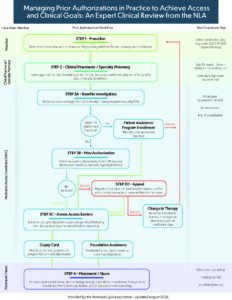
Managing Prior Authorizations in Practice to Achieve Access and Clinical Goals: An Expert Clinical Review from the National Lipid Association
Highlights Abstract Prior authorization (PA) has become a significant administrative challenge to achieving timely, evidence-based cardiometabolic care. This practical review provides a playbook for navigating…

S6E6: All Hands on Deck: The Power of Multidisciplinary Lipid Care
Explore the NLA’s new guidance on building effective, team-based approaches to improve outcomes in clinical lipidology and cardiometabolic care. Read the Expert Clinical Review HERE. Watch…

Multidisciplinary Teams in Clinical Lipidology and Cardiometabolic Care: A National Lipid Association Expert Clinical Review
Multidisciplinary care teams lead to improved lipid management and cardiometabolic health.
NLA Releases Expert Clinical Review on Familial Chylomicronemia Syndrome (FCS)
The National Lipid Association (NLA) has released a comprehensive clinical review titled “Familial Chylomicronemia Syndrome: An Expert Clinical Review from the National Lipid Association.” This…

National Lipid Association Releases Expert Clinical Review on Familial Chylomicronemia Syndrome (FCS)
The National Lipid Association (NLA) has released a comprehensive clinical review titled “Familial Chylomicronemia Syndrome: An Expert Clinical Review from the National Lipid Association.” This…
S6E4: Familial Chylomicronemia Syndrome: An Expert Clinical Review from the National Lipid Association
Listen to Dr. Alan Brown discuss the latest FCS paper with Dr. Fiza Javed and Dr. Nivedita Patni.
Familial Chylomicronemia Syndrome: An Expert Clinical Review from the National Lipid Association
Familial chylomicronemia syndrome (FCS) is a rare autosomal recessive disorder characterized by extreme hypertriglyceridemia and a high risk of recurrent acute pancreatitis.
- 1
- 2