


NLA Resources
Knowledge Center
Membership Resources
Join the National Lipid Association, focused on enhancing the science and practice of lipidology to promote optimal cardiometabolic health.
After making your filter selections, please scroll down to see results.
Cardiometabolic Syndrome: A Package Deal
Cardiometabolic syndrome, also known as “metabolic syndrome,” refers to a constellation of metabolic abnormalities and cardiovascular risk factors clustered in a given patient. The definitions…

Inflammation in Obesity and Cardiovascular Disease
Obesity is a chronic, relapsing, heterogenous disease characterized by impaired energy regulation and inflammation that leads to cardiometabolic, biomechanical, and psychosocial health consequences. The prevalence…
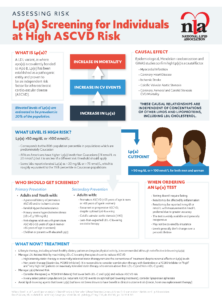
Lp(a) Screening for Individuals at High ASCVD Risk
Adulting: Guidance for Transitioning Patients from Pediatric to Adult Lipid Clinics
The assumption is that patients can engage in self-care and can navigate the healthcare system, thus ensuring a smooth transition. This is an extended process…
Is There a Role for Aspirin in Prevention in 2022?
With recent guideline changes, it is common for clinicians to field questions regarding aspirin therapy. This article is intended to help clinicians apply an individualized…
Case Study: Glucagon-Like Peptide-1 (GLP-1) Receptor Agonists in the Treatment of Obesity
Incretins are hormones secreted by intestinal cells in response to the ingestion of glucose and other nutrients. These hormones stimulate pancreatic β cells to secrete…
AHA Scientific Statement on Nonalcoholic Fatty Liver Disease
Nonalcoholic fatty liver disease (NAFLD) contributes to cardiovascular disease risk through dyslipidemia, insulin resistance, altered coagulation states, and increased inflammation. NAFLD occurs in greater than…
Polyphenols Protective Effects
Cardiometabolic disease is the concurrence of several disease states, including impaired glucose tolerance, hypertension, dyslipidemia, and visceral adiposity. These risk factors predispose patients to chronic…