


NLA Resources
Knowledge Center
Membership Resources
Join the National Lipid Association, focused on enhancing the science and practice of lipidology to promote optimal cardiometabolic health.
After making your filter selections, please scroll down to see results.
The STatin Adverse Treatment Experience Survey: Experience of patients reporting side effects of statin therapy
The goal of the STatin Adverse Treatment Experience survey was to describe patients' experiences after reporting ≥1 recent statin-associated adverse event and identify opportunities to…
Patients Experience with Statin Therapy: Findings of the STatin Adverse Treatment Experience (STATE) Patient Survey*

Statin Use in Chronic Hepatitis C Infection, NAFLD/NASH, Cirrhosis and Hepatocellular Carcinoma
Case Presentation: G.S. is a 60-year-old male referred for cholesterol treatment complicated by background liver disease. He has a history of schizophrenia and chronic hepatitis C virus (HCV) diagnosed in 2016. He is asymptomatic and…
Getting the e-Patient Equipped and Engaged
Patients often search the internet for medical answers and solutions before talking to their healthcare provider (HCP). This article provides practice pearls for conversing with…
Use of Lipoprotein(a) in clinical practice: A biomarker whose time has come. A scientific statement from the National Lipid Association
Lipoprotein(a) [Lp(a)] is a well-recognized, independent risk factor for atherosclerotic cardiovascular disease, with elevated levels estimated to be prevalent in 20% of the population.

Myths and Misunderstandings – The Rationale and Evidence for the Screening and Treatment of Pediatric Dyslipidemia
Landmark autopsy studies have demonstrated that atherosclerosis begins in youth and is associated with numerous cardiovascular disease (CVD) risk factors, including dyslipidemia.(1,2) Having fewer cardiometabolic…
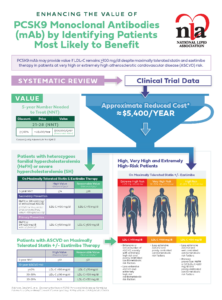
Enhancing the value of PCSK9 monoclonal antibodies by identifying patients most likely to benefit: A consensus statement from the National Lipid Association
Acquisition costs and cost-effectiveness have limited access and recommendations to use proprotein convertase subtilisin/kexin type 9 (PCSK9)–inhibiting monoclonal antibodies (mAbs).