

Cardiovascular Disease in Rural American Population
Despite significant improvements in cardiovascular disease (CVD) outcomes and decline in overall CVD deaths, CVD continues to be the leading cause of death in the United States with the two main cardiovascular disease conditions– heart failure and stroke– showing increasing mortality rates.(1) This rate of increase in mortality disproportionately affects Americans living in rural communities who are experiencing rising CVD mortality. Consequently the American Heart Association (AHA) has created a virtual ‘call to action’ in approaching rural healthcare (2), to address the excess burden of cardiovascular disease experienced in those environments. Understanding the characteristics of these communities and their unique needs is therefore pivotal in improving the health of this specific population.
Rural Population Demographics
The term rural community can be described as a geographic area situated outside towns and cities, or a community not within an area considered urban.(3) The population thresholds of 2,500 to 50,000 can be used to differentiate rural from urban communities – wherein a population of greater than 50,000 is considered urban or metropolitan (also known as metro) area. The Office of Management and Budget (OMB) considers micropolitan (or micro) areas (defined as urban core of 10,000-49,999 people) and counties with population under 10,000 people as rural.(3) The United States Census Bureau, the Health Resources and Services Administration (HRSA) of the United States Department of Health and Human Services consider rural communities to, “include all people, housing and territory not included within an urban area”.(3,4) According to the OMB definition, 15% of the total population (46.2 million people), following the 2010 census, resided in 72% of the land area in the country.(3) A newer census data places 97% of United States land area in rural counties with 19.3% (60 million people) of the population residing in those areas.(5-7) That said, the population of the most rural counties appears to be declining.(8,9) Adults >65 years of age constitute 19% of the rural population compared with 15% in urban counties.(10) Rural counties have a more racially and ethnically homogenous population with whites making up about 80% of the rural population, compared to 68% of suburban population or 44% of the urban population.(9) However, there are clusters of racial/ethnic groups in different regions of the country.(11)
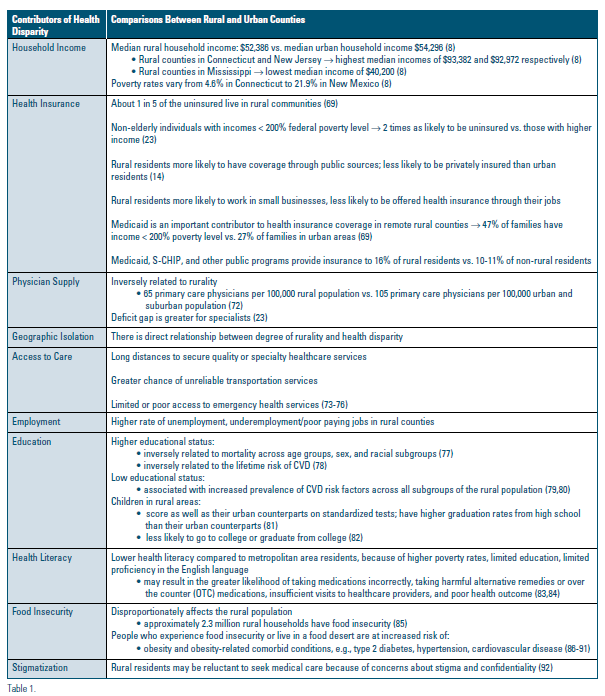
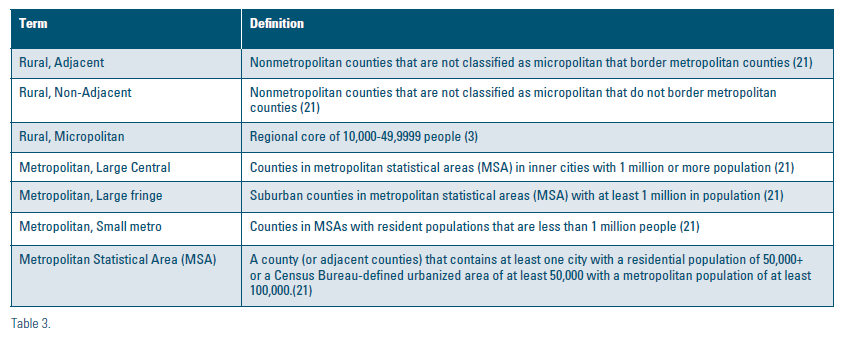
The median household income of rural America is less than the median household income of urban counties.(5) The rural counties in Connecticut and New Jersey have the highest median household incomes, while the rural counties in Mississippi have the lowest median household incomes (7), (Table 1). Rural counties can be further categorized by their ‘degree of rurality’ – defined as whether they are near an urban county as being ‘adjacent’ (table 3), or located further away from urban county as ‘non-adjacent’.
Health of Rural Americans
Rural American populations experience significant health disparity resulting from the unique regional and rural-specific challenges (Table 1).(12)
The health of a population is typically determined by
- Risk factors of the specific populations
- Sociodemographic characteristics of the population
- Access to health care services
Health insurance coverage and availability of providers directly affects access to health care (Table 2). There are about 41 million uninsured persons in the United States. More than 20 years of research showed that rural residents are more likely to be uninsured than residents in urban areas.(13,14)
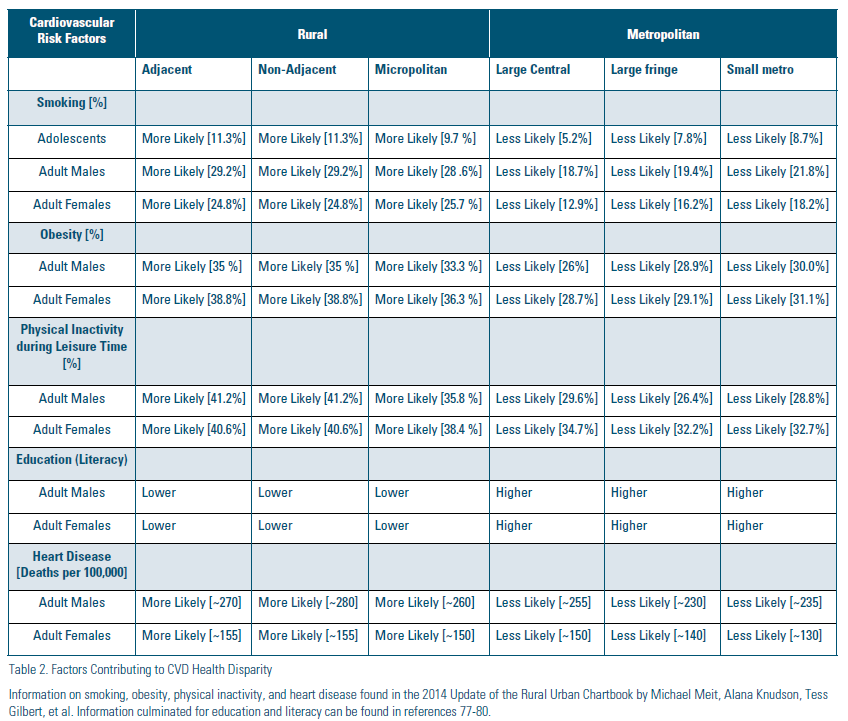
Life expectancy is longer in large urban areas than in rural counties (79.1 years versus 76.7 years). Additionally, life expectancy is inversely proportional to the degree of rurality (15) measured by using Index of Relative Rurality (IRR) which is based on four dimensions of rurality: population, population density, extent of urbanized area, and distance from the closest metropolitan area.(16) The inequalities in life expectancy parallel inequalities in health and behavioral factors such as higher prevalence of smoking and obesity, and limited access to healthcare in rural communities.(17-21) Across the country, rural adolescents are more likely to smoke than those in urban counties – 11% compared to 5% in large central counties (defined as counties containing at least 250,000 residents of any principal city of the metropolitan statistical areas – MSA).(21) Similarly, both rural men and women adults are more likely to smoke than their urban counterparts (28.8% vs 18.7% in adult men: 25.3% vs 12.9% in adult women) (Table 2).(21) Similarly, the obesity prevalence correlates with rurality. Data from 2010-2011 shows adults living in the most rural counties across the nation have the highest age-adjusted prevalence of obesity compared to adults living in central areas of large urban counties.(21) Furthermore, leisure time inactivity was most prominent among men and women living in the most rural counties.(21,22) Limitations in physical activity due to chronic health conditions is more prevalent in adults in non-urban counties compared to those in urban counties (Table 2).
Heart Disease and Stroke
As indicated initially, despite overall declines in cardiovascular disease-related mortality in the United States since 2000, it remains a leading cause of death amongst both men and women.(1) Moreover, the decline in CVD incidence and prevalence is disproportionate between urban and rural communities, further widening the gap. This is due to considerable disparity in CVD risks among people living in rural settings (23) associated with higher prevalence of poverty, geographic isolation, limited access to healthy food (food desert), physical inactivity, and other unique socio-economic issues.
The incidence of ischemic heart disease is highest in the most rural counties, reaching over 25% in some of the most rural counties in the Midwest compared to fringe counties of large urban areas.
A national study showed an alarming increase in coronary artery disease deaths since 2009 among rural women aged <65 years following decades of decline in heart disease deaths.(24) Two research studies published in 2020 indicated that rural county women continue to die prematurely from coronary artery disease, whereas women who live in urban areas have experienced an uninterrupted decrease in premature coronary artery disease deaths.(25,26) Living in rural areas is also a factor that impacts heart failure survival.(25,26)
In a cross sectional study examining trends in heart failure-related cardiovascular mortality in rural versus urban counties using multivariable negative binomial regression models with adjustment for demographic and socioeconomic characteristics, physician density, and risk factor prevalence, Pierce J.B et al. noted higher age-adjusted mortality ratios (AAMR) among rural county residents (73.2[95%CI: 72.2-74.2] vs. 57.2[56.8-57.6]).(27) Black men were noted to have the highest AAMR (131.1[123.3-138.9]) in 2018. Individuals between 35 and 64 years of age had the greatest increase in heart failure-related mortality (+6.1%/year). After adjustment for county-level factors (demographic and socioeconomic characteristics, risk factor prevalence, physician density) (Table 1) the rural-urban IRR persisted among both younger and older adults.(27)
Rural communities have a higher stroke mortality by up to 30% compared to urban counties, with stroke accounting for about 7.1% of the deficit in rural-to-urban life expectancy.(28,29) Studies have shown that stroke care is suboptimal for patients in rural communities, as these patients are disproportionately impacted by reduced access to technological advancements in stroke care, and practitioners are less likely to have the clinical expertise for stroke management. Additionally, there is less likelihood of the availability of the necessary infrastructure for prompt neuroimaging, fewer specialized clinical support units such as dedicated neuro-cortical stroke units. Patients are less likely to receive intravenous thrombolytic therapy (4.2% vs 9.2%, adjusted odds ratio, 0.55[95%CI, 0.51-0.59], P<0.001) and endovascular therapy (1.63% vs 2.41%, adjusted odds ratio, 0.64[0.57-0.73],p,0.001) and are, therefore, more likely to have higher inpatient mortality.(30) Inadequate access to emergency services due to long response time to 9-1-1 calls (31) is common. Time-to-treatment may be longer because of delays in inter-hospital transfers and such delays may make patients ineligible for reperfusion therapy.(30-32) The increase in mortality among patients in rural locations may also be due to poor compliance with post discharge care plans (because of lower health literacy), reduced compliance with appointments as the patients often must commute long distances for care or experience long wait times for appointments with specialists.
Rural Hospitals
Rural hospitals play a pivotal role in the healthcare delivery system, providing services across the continuum of care from primary care services to emergency care services and long-term care services. As of February of 2020, there were 1,844 rural hospitals in the United States, and closure of 120 (representing about 7%) rural hospitals across 31 states over a 10-year period (2010 – 2019) contributed to a substantial strain on the already disadvantaged rural population.(33,34) The regions that were affected most with the highest number of closures were the poorest areas (33,34), particularly in states not participating in the Medicaid expansion program of the Affordable Care Act (ACA), such as Alabama, Mississippi, Tennessee, South Carolina, North Carolina, Kansas, Georgia, South Dakota, Wyoming, Texas, Wisconsin, and Florida.(35) The Center for Health Services Research at the University of North Carolina tracking hospital closures also found that about 453 rural hospitals (or 25%) including critical access, rural, and community hospitals are at risk of closure because of poor performance levels similar to the pre-closure performance levels noted in the rural hospitals already closed.(34)
Rural hospitals face persistent challenges that place them at increased risk of closure. These include low patient volumes, and a high percentage of uninsured, Medicaid, and Medicare patients. The responsibility of taking care of older, sicker patients who require costly care coupled with the difficulty with recruitment and retention of the necessary workforce augments the urban-rural healthcare divide.(36,37) To alleviate the problem of low patient volumes on hospitals, Congress established the Low-Volume Hospital Adjustment (LVH) program in 2003 which assists hundreds of rural hospitals.(36-38) Low patient volumes also affect provider abilities to participate in performance measures and quality improvement activities because of the inability to obtain statistically reliable results. To address this problem the Centers for Medicare Services (CMS) tasked the National Quality Forum to identify a core set of rural-relevant measures and develop recommendations on measuring and improving access to care.
States continue to adopt various measures to mitigate barriers to accessible health care and to make health care services more affordable. These approaches center on state policies and investments directed towards safeguarding rural health facilities, improving health care coverage, and changing rural health care delivery.
Summary and Recommendations
As CVD continues to pose a significant morbidity and mortality burden, necessary steps towards the improvement of cardiovascular disease management in the rural population will involve addressing the specific challenges these communities face, and diverse clinical and public health interventions directed at the underlying causes of the disparities (39,40):
- Improving the social and physical infrastructure of the rural communities
- Improving access to healthy food
- Reducing sedentary behavior
- Promoting smoking cessation
Healthier behaviors in the rural population may be promoted by investment in infrastructure such as playgrounds, parks that promote increased physical activity, sporting programs, and events that stimulate physical activity.(41,42) As smoking is a principal contributor to CVD morbidity and mortality, interventions that motivate rural residents to reduce or quit smoking including proper regulatory and tobacco use control policies are being implemented in some rural communities.(43-46)
Although faced with funding, coverage and reimbursement challenges, Community Health Worker (CHW) programs have proven to be a critical resource in helping to reduce CVD risks in rural areas by addressing therapeutic lifestyle changes and adherence to healthier diets.(47,48) CHW-led efforts have been adapted to multiple settings and populations to obtain better heart health and stroke recovery outcomes in rural communities.(49-51) For example, a study using mathematical models to evaluate use of new technologies found that emergency medical service (EMS) responders can send automated external defibrillators (AEDs) via drones to treat cardiac events faster than traditional in-person responders.(52) Targeted gap-filling approaches whereby cardiology services are expanded to rural communities through the use of visiting cardiologists are being employed in some areas.(53) In line with best practices, many states implement routing policies that ensure the transfer of stroke patients to primary stroke centers.(54) In some places, rural hospitals are converted to Critical Access Hospitals (CAHs) or some seek certification by The Joint Commission and American Heart Association to provide primary or advanced stroke care.(55) The creation of residency training programs with rural tracks improves the likelihood of increasing the number of physicians who may return to rural settings to establish their practices.(56-58)
Telehealth services serving CVD and stroke patients are being used to successfully connect rural patients with transportation problems to specialty care.(59,60) Telestroke networks are being used to improve emergency triage and treatment of acute stroke.(61) Telestroke services improve the treatment of acute stroke patients by remotely connecting rural health providers to stroke specialists who can guide the treatment of acute stroke patients.(62-64) Telehealth can also be used to expand services that can potentially lower CVD risks such as conducting routine patient visits with specialists virtually (thereby improving patient compliance), patient outreach educational programs on CVD risk reduction.
Finally, there is a potentially crucial role for the National Lipid Association (NLA) and the Foundation of the NLA in efforts to improve the health of rural America. This could be accomplished via telehealth or virtual platforms providing presentations by lipid specialists at rural clinics and hospitals to bring rural practitioners abreast of current information on cardiovascular risk reduction, knowledge of current cardiovascular disease guidelines and application of current guidelines in clinical practice. All these efforts would support improved CVD morbidity and mortality in the rural setting.
Disclosure statement: Dr. Nwizu has no financial disclosures to report. Mr. Nwizu has no financial disclosures to report.
References
- Virani SS, Alonso A, Aparicio HJ, Benjamin EJ, Bittencourt MS, Callawa CW, Carson AP, Chamberlain AM, Cheng S, Delling FN, Elkind MSV, Evenson KR, Ferguson JF, Gupta DK, Khan SS, Kissela BM, Knutson KL, Lee CD, Lewis TT, Liu J, Loop MS, Lutsey PL, Ma J, Mackey J, Martin SS, Matchar DB, Mussolino ME, Navaneethan SD, Perak AM, Roth GA, Samad Z, Satou GM, Schroeder EB Shah SH, Shay CM, Stokes A, VanWagner LB, Wang N-Y, Tsao CW; on behalf of the American Heart Association Council on Epidemiology and Prevention Statistics Committee and Stroke Statistics Subcommittee. Heart disease and stroke statistics—2021 update: a report from the American Heart Association. Circulation. 2021;143:e254–e743. doi: 10.1161/CIR.0000000000000950
- Harrington RA, Califf RM, Balamurugan A, Brown N, Benjamin RM, Braund WE, et al. Call to Action: Rural Health: A Presidential Advisory From the American Heart Association and American Stroke Association. Circulation. 2020. PMID:32078375
- Defining Rural Population. Official web site of the U.S. Health Resources & Services Administration.Published April 28, 2017. Accessed November 2, 2021. https://www.hrsa.gov/rural-health/about-us/definition/index.html
- Defining rural population: Guidance portal. Defining Rural Population | Guidance Portal. Published Jun 25, 2020. Accessed November 2, 2021. https://www.hhs.gov/guidance/document/defining-rural-population
- Bureau UC. One in Five Americans Live in Rural Areas. Census.gov. Accessed November 2, 2021. https://www. census.gov/library/stories/2017/08/rural-america.html
- US Census Bureau. American Community Survey: 2011–2015. Washington, DC: US Census Bureau; 2010. https://www.census.gov/programs-surveys/acsexternal icon
- New Census Data Show Differences Between Urban and Rural Populations. Census.gov. Accessed November 2, 2021. https://www.census.gov/newsroom/press-releases/2016/cb16-210.html
- Swenson D. Opinion: Dwindling population and disappearing jobs is the fate that awaits much of rural America – MarketWatch. Accessed November 2, 2021. https://www.marketwatch.com/story/much-of-rural-america-is-fated-to-just-keep-dwindling-2019-05-07
- Parker, K, Horowitz, J, Brown, A, Fry, R, Cohn, D, Igielnik, R. What Unites and Divides Urban, Suburban, and Rural Communities. Washington, DC: Pew Research Center;2018.
- US Department of Agriculture Economic Research Service. Rural America at a Glance: 2018 Edition. Washington, DC: USDA; November 2018.
- Norris, T, Vines, PL, Hoeffel, EM. The American Indian and Alaska Native Population: 2010. Washington, DC: US Department of Commerce;2012.
- CMS Rural Health Strategy. Accessed November 02, 2021. https://www.cms.gov/About-CMS/Agency-Information/OMH/Downloads/Rural-Strategy-2018.pdf
- Rural Health Research and Policy Centers. Challenges for Improving Health Care Access in Rural America: A Compendium of Research and Policy Analysis Studies of Rural Health Research and Policy Analysis Centers | National Rural Health Resource Center. National Rural Health Resource Center. Accessed November 2, 2021. https://www.ruralcenter.org/sites/default/files/research_ compendium.pdf
- Lenardson J, Ziller E, Coburn A, Anderson N. Health Insurance Profile Indicates Need to Expand Coverage in Rural Areas. Muskie School of Public Service – Maine Rural Health Research Center Accessed November 2, 2021. http://muskie.usm.maine.edu/Publications/rural/pb/Rural-Health-Insurance-Profile.pdf
- Singh GK, Siahpush M. Widening rural-urban disparities in life expectancy, U.S., 1969-2009. Am J Prev Med. 2014 Feb;46(2):e19-29. doi: 10.1016/j. amepre.2013.10.017. PMID: 24439358.
- Waldorf BS, ed. A Continuous Multi-Dimensional Measure of Rurality: Moving Beyond Threshold Measures.; 2006. doi:10.22004/ag.econ.21383
- Bureau of Health Professions. Area resource file, 2009–10, technical documentation. Rockville MD: Health Resources and Services Administration, 2010.
- Schiller JS, Lucas JW, Ward BW, Peregoy JA. Summary health statistics for U.S. adults: National Health Interview Survey, 2010. Vital Health Stat 2012;10(252):1–207
- Casey MM, Call KT, Klingner JM. Are rural residents less likely to obtain recommended preventive healthcare services? Am J Prev Med 2001;21(3):182–8
- Okon NJ, Fogle CC, McNamara MJ, et al. Statewide efforts to narrow the rural–urban gap in acute stroke care. Am J Prev Med 2010;39(4): 329–33
- Michael Meit, Alana Knudson, Tess Gilbert, et al. The 2014 Update of the Rural-Urban Chartbook. Published online 2014:153.
- Eisenhauer CM. Acceptability of Health technology for self-monitoring eating and activity among rural men. Public Health Nurs. 2017;34(2):138-146.
- Cossman JS, James WL, Cosby AG, Cossman RE. Underlying causes of the emerging nonmetropolitan mortality penalty. Am J Public Health. 2010;100(8):1417. doi: 10.2105/AJPH.2009.174185.
- Health disparities in rural us: Higher coronary artery disease death in women under 65 and people with heart failure. American Heart Association. https://newsroom. heart.org/news/health-disparities-in-rural-us-higher-coronary-artery-disease-death-in-women-under-65-and-people-with-heart-failure. Published April 22, 2020. Accessed January 17, 2022.
- Moccetti F, Bossard M, Latifi Y, et al. Increasing mortality from premature coronary artery disease in women in the rural United States. Journal of the American Heart Association. April 22, 2020. Doi: https://doi.org/10.1161/JAHA.119.015334
- Sterling MR, Ringel JB, Pinheiro LC, et al. Social Determinants of Health and 90-Day Mortality After Hospitalization for Heart Failure in the REGARDS Study. J Am Heart Assoc. 2020;9(9):e014836. doi:10.1161/JAHA.119.014836
- Pierce JB, Shah NS, Petito LC, Pool L, Lloyd-Jones DM, Feinglass J, Khan SS. Trends in heart failure-related cardiovascular mortality in rural versus urban United States counties, 2011-2018: A cross-sectional study. PLoS One. 2021 Mar 3;16(3):e0246813. doi: 10.1371/journal.pone.0246813. PMID: 33657143; PMCID: PMC7928489.
- Singh, GK, Siahpush, M. Widening rural-urban disparities in all-cause mortality and mortality from major causes of death in the USA, 1969-2009. J Urban Health. 2014;91:272–292. doi: 10.1007/s11524-013-9847-2.
- Howard, G, Kleindorfer, DO, Cushman, M, Long, DL, Jasne, A, Judd, SE, Higginbotham, JC, Howard, VJ. Contributors to the excess stroke mortality in rural areas in the United States. Stroke. 2017;48:1773–1778. doi: 10.1161/STROKEAHA.117.017089.
- Hammond G, Luke AA, Elson L, Towfighi A, Joynt Maddox KE. Urban-Rural Inequities in Acute Stroke Care and In-Hospital Mortality. Stroke. 2020 Jul;51(7):2131-2138. doi: 10.1161/STROKEAHA.120.029318. Epub 2020 Jun 17. PMID: 32833593.
- Patterson, DG, Skillman, SM, Fordyce, MA. Prehospital emergency medical services personnel in rural areas: Results from a survey in nine states. WWAMI Rural Health Research Center. 2015. Accessed January 27, 2020. https://depts.washington.edu/uwrhrc/uploads/RHRC_FR149_Patterson.pdf.
- George, BP, Pieters, TA, Zammit, CG, Kelly, AG, Sheth, KN, Bhalla, T. Trends in interhospital transfers and mechanical thrombectomy for United States acute ischemic stroke in patients. J Stroke Cerebrovasc Dis. 2019;28:980–987. doi: 10.1016/j.jstrokecerebrovasdis.2018.12.018
- Michael Topchik, Ken Gross, Melanie Pinette, Troy Brown, Billy Balfour, Hayleigh Kein. The Rural Health Safety Net Under Pressure: Rural Hospital Vulnerability. Published date February 2020. Accessed date November 2, 2021. https://www.ivantageindex.com/wp-content/uploads/2020/02/CCRH_Vulnerability-Research_FiNAL-02.14.20.pdf.
- Estes C. 1 In 4 Rural Hospitals Are At Risk Of Closure And The Problem Is Getting Worse. Forbes. Accessed November 2, 2021. https://www.forbes.com/sites/claryestes/2020/02/24/1-4-rural-hospitals-are-at-risk-of-closure-and-the-problem-is-getting-worse/
- Status of State Medicaid Expansion Decisions: Interactive Map. Published: Oct 08, 2021. Accessed Oct 29, 2021. https://www.kff.org/medicaid/issue-brief/status-of-state-medicaid-expansion-decisions-interactive-map/
- American Hospital Association, ed. Challenges Facing Rural Communities and the Roadmap to Ensure Local Access to High-quality, Affordable Care. AHA. Published online 2019:24. Accessed November 2, 2021. https://www.aha.org/system/files/2019-02/rural-report-2019.pdf
- United States General Accounting Office: Request to Congressional Requesters: Factors that Affect Risk of Closure. Published June 19, 1990. Accessed November 2, 2021 https://www.gao.gov/assets/hrd-90-134.pdf.
- Whitaker RG, Holmes GM, Pink GH. The Impact of the Low Volume Hospital (LVH) Program on the Viability of Small, Rural Hospitals. NC Rural Health Research Program. 2016:1 – 7. http://www.shepscenter.unc.edu/download/13871/.
- Saleh ZT, Lennie TA, Mudd-Martin G, Bailey AL, Novak MJ, Biddle M, Khalil AA, Darawad A, Moser
DK Decreasing sedentary behavior by 30 minutes per day reduces cardiovascular disease risk factors in rural Americans. Heart & Lung 44, no. 5 (2015): 382-386 - Lloyd-Jones DM, Hong Y, Labarthe D, Mozaffarian D, Appel LJ, Van Horn L, Greenlund K, Daniels S, Nichol G, Tomaselli GF, Arnett DK. Defining and setting national goals for cardiovascular health promotion and disease reduction: the American Heart Association’s strategic Impact Goal through 2020 and beyond. Circulation. 2010. 2;121(4):586-613.
- Kang, Junghee, Martha J. Biddle, Terry A. Lennie,
and Debra K. Moser. “An Intensive Heart Health Intervention Can Improve Diet Quality and Reduce Cardiovascular Risk Factors in Individuals Residing
in Rural Environments.” Circulation 132, no. suppl_3
(2015): A11926-A11926. - Baker, Elizabeth A., Michael Elliott, Ellen Barnidge, Amy Estlund, Ross C. Brownson, Anne Milne, Freda Kershaw, and Derek Hashimoto. “Implementing and Evaluating Environmental and Policy Interventions for Promoting Physical Activity in Rural Schools.” Journal of School Health 87, no. 7 (2017): 538-545.
- Abbott L, Williams C, Slate E, Gropper S. Promoting Heart Health among Rural African Americans. J Cardiovasc Nurs. 2018;33(1):E14. doi: 10.1097/JCN.0000000000000410.
- Mamudu HM, Paul T, Veeranki SP, Wang L, Panchal HB, Budoff M. Subclinical Atherosclerosis and Relationship with Risk Factors of Coronary Artery Disease in a Rural Population. Am J Med Sci. 2015;350(4):257-262. doi: 10.1097/MAJ.0000000000000548.
- Kariisa M, Seiber E. Distribution of Cardiovascular Disease and Associated Risk Factors by County Type and Health Insurance Status: Results from the 2008 Ohio Family Health Survey. Public Health Rep. 2015;130(1):87-95. doi: 10.1177/003335491513000111.
- Doogan NJ, Roberts ME, Wewers ME, Stanton CA, Keith DR, Gaalema DE, Kurti AN, Redner R, Cepeda-Benito A, Bunn JY, Lopez AA. A Growing Geographic Disparity: Rural and Urban Cigarette Smoking Trends in the United States. Preventive Medicine. 2017;104:79-85.
- Davidson PM, Macdonald PS. Interventions for modern times: complex, collaborative, and culturally appropriate. Circ Cardiovasc Qual Outcomes. 2011 Nov 1;4(6):584-6. doi: 10.1161/CIRCOUTCOMES.111.963306. PMID: 22085983.
- Liao Y, Siegel PZ, White S, Dulin R, Taylor A. Improving Actions to Control High Blood Pressure in Hispanic Communities — Racial and Ethnic Approaches to Community Health Across the U.S. Project, 2009–2012. Preventive Medicine. 2016;83:11-15. doi:10.1016/j. ypmed.2015.11.027
- Johansson P, Schober D, Tutsch SF, et al. Adapting an Evidence-based Cardiovascular Disease Risk Reduction Intervention to Rural Communities. J Rural Health. 2019;35(1):87-96. doi:10.1111/jrh.12306
- Schepens Niemiec SL, Blanchard J, Vigen CLP, et al. Evaluation of ¡Vivir Mi Vida! to Improve Health and Wellness of Rural-Dwelling, Late Middle-Aged Latino Adults: Results of a Feasibility and Pilot Study of a Lifestyle Intervention. Prim Health Care Res Dev. 2018;19(5):448-463. doi:10.1017/S1463423617000901
- Kitzman P, Hudson K, Sylvia V, Feltner F, Lovins J. Care Coordination for Community Transitions for Individuals Post-stroke Returning to Low-Resource Rural Communities. J Community Health. 2017;42(3):565-doi:10.1007/s10900-016-0289-0
- Boutilier JJ, Brooks SC, Janmohamed A, et al. Optimizing a Drone Network to Deliver Automated External Defibrillators. Circulation. 2017;135(25):2454-2465. doi:10.1161/CIRCULATIONAHA.116.026318
- Gruca, Thomas S., Tae-Hyung, Pyo, and Gregory C. Nelson. Providing Cardiology Care in Rural Areas through Visiting Consultant Clinics. Journal of the American Heart Association. 2016; 5: e002909.
- Mullen MT, Wiebe DJ, Bowman A, et al. Disparities in Accessibility of Certified Primary Stroke Centers. Stroke. 2014;45(11):3381-3388. doi:10.1161/STROKEAHA.114.006021.
- Silvinski A, Jones R, Whitehead H, Hooper V. Improving Access to Stroke Care in the Rural Setting: The Journey to Acute Stroke Ready Designation. J Emerg Nurse. 2017; 43(1):24-32. doi: 10.1016/j.jen.2016.10.006.
- Shannon, C. Ken and J. Jackson. Validity of Medical Student Questionnaire Data in Prediction of Rural Practice Choice and Its Association With Service Orientation. Journal of Rural Health. 2015; 31(4): 373-381.
- Crump WJ, Fricker RS, Ziegler CH, Wiegman DL. Increasing the Rural Physician Workforce: A Potential Role for Small Rural Medical School Campuses. J Rural Health. 2016;32(3):254-259. doi:10.1111/jrh.12156
- Johnson, George, Wright, Fredrick Clive, and Kirsty Foster. The Impact of Rural Outreach Programs on Medical Students’ Future Rural Intentions and Working Locations: A Systematic Review. BMC Medical Education. 2018; 18(1): 196.
- achrison KS, Hayden EM, Schwamm LH, et al. Characterizing New England Emergency Departments by Telemedicine Use. West J Emerg Med. 2017;18(6):1055-1060. doi:10.5811/westjem.2017.8.34880
- Mohr NM, Harland KK, Chrischilles EA, Bell A, Shane DM, Ward MM. Emergency Department Telemedicine is Used for More Severely Injured Rural Trauma Patients, but Does Not Decrease Transfer: A cohort study. Acad Emerg Med. 2017;24(2):177-185. doi: 10.1111/acem.13120.
- Newell MC, Strauss CE, Freier T, et al. Design and Initial Results of the Minneapolis Heart Institute TeleHeart Program. Circulation: Cardiovascular Quality and Outcomes. 2017;10(10):e003904. doi:10.1161/CIRCOUTCOMES.117.003904
- Nemeth LS, Jenkins C, Jauch EC, et al. A Community-Engaged Assessment of Barriers and Facilitators to Rapid Stroke Treatment. Research in Nursing & Health. 2016;39(6):438-448. doi:10.1002/nur.21749.
- Lippman JM, Smith SNC, McMurry TL, et al. Mobile Telestroke During Ambulance Transport Is Feasible in a Rural EMS Setting: The iTREAT Study. Telemed J E Health. 2016;22(6):507-513. doi:10.1089/tmj.2015.0155.
- Wechsler LR, Demaerschalk BM, Schwamm LH, et al. Telemedicine Quality and Outcomes in Stroke: A Scientific Statement for Healthcare Professionals From the American Heart Association/American Stroke Association. Stroke. 2017;48(1):e3-e25. doi:10.1161/STR.0000000000000114
- The Kaiser Family Foundation, ed. The Uninsured in Rural America. The Kaiser Commission on Medicaid and the Uninsured.:2. https://www.kff.org/wp-content/uploads/2013/01/the-uninsured-in-rural-america-update-pdf.pdf
- Parks A, Hoegh A, Kuehl D. Rural Ambulatory Access for Semi-Urgent Care and the Relationship of Distance to an Emergency Department. West J Emerg Med. 2015; 16(4):594-599. doi: 10.5811/westjem.2015.4.25485.
- Bunnell BE, Davidson TM, Dewey D, Price M, Ruggiero KJ. Rural and Urban/Suburban Families’ Use of a Web-Based Mental Health Intervention. Telemed J E Health. 2017;23(5):390-396. doi: 10.1089/tmj.2016.0153.
- O’Toole M. Healthcare Access Lagging in Rural U.S.: Report. Reuters. Published July 27, 2011. https://www.reuters.com/article/us-healthcare-access-lagging-idUSTRE76Q66F20110727
- Batsis, J.A., Pletcher, S.N. & Stahl, J.E. Telemedicine and Primary Care Obesity Management in Rural Areas – Innovative Approach for Older Adults? BMC Geriatr 17, 6 (2017). https://doi.org/10.1186/s12877-016-0396-x
- Dracup K, Moser DK, Pelter MM, et al. Randomized, Controlled Trial to Improve Self-Care in Patients
with Heart Failure Living in Rural Areas. Circulation. 2014;130(3):256-264. doi:10.1161/CIRCULATIONAHA.113.003542. - National Center for Health Statistics. Health, United States, 2017: With Special Feature on Mortality. Center for Disease Control and Prevention. 2018.
- Hummer, RA, Hernandez, EM. The Effect of Educational Attainment on Adult Mortality in the United States. Popul Bull. 2013;68:1–16.
- Kubota, Y, Heiss, G, MacLehose, RF, Roetker, NS, Folsom, AR. Association of Educational Attainment with Lifetime Risk of Cardiovascular Disease: The Atherosclerosis Risk in Communities Study. JAMA Intern Med. 2017;177:1165–1172. doi: 10.1001/jamainternmed.2017.1877.
- Appel, SJ, Harrell, JS, Deng, S. Racial and Socioeconomic Differences in Risk Factors for Cardiovascular Disease among Southern Rural Women. Nurs Res. 2002;51:140–147. doi: 10.1097/00006199-200205000-00002.
- Quarells, RC, Liu, J, Davis, SK. Social Determinants of Cardiovascular Disease Risk Factor Presence among Rural and Urban Black and White Men. J Mens Health. 2012;9:120–126. doi: 10.1016/j.jomh.2012.03.004.
- Institute of Education Sciences. The Status of Rural Education. Washington, DC: National Center for Education Statistics; 2013.
- US Department of Agriculture Economic Research Service. Rural Education. 2019. Accessed January 10, 2020. https://www.ers.usda.gov/topics/rural-economy-population/employment-education/rural-education/
- Agency for Healthcare Research and Quality. Health Literacy Interventions and Outcomes: An Updated Systematic Review. https://www.ncbi.nlm.nih.gov/books/NBK82434/pdf/Bookshelf_NBK82434.pdf
- Zahnd, WE, Scaife, SL, Francis, ML. Health Literacy Skills in Rural and Urban Populations. Am J Health Behav. 2009;33:550–557. doi: 10.5993/ajhb.33.5.8.
- Magnani JW, Mujahid MS, Aronow HD, et al. Health Literacy and Cardiovascular Disease: Fundamental Relevance to Primary and Secondary Prevention: A Scientific Statement From the American Heart Association. Circulation. 2018;138(2):e48-e74. doi:10.1161/CIR.0000000000000579
- Ford, ES. Food security and cardiovascular disease risk among adults in the United States: findings from the National Health and Nutrition Examination Survey, 2003-2008. Prev Chronic Dis. 2013;10:E202. doi: 10.5888/pcd10.130244.
- Mendy, VL, Vargas, R, Cannon-Smith, G, Payton, M, Enkhmaa, B, Zhang, L. Food insecurity and cardiovascular disease risk factors among Mississippi adults. Int J Environ Res Public Health. 2018;15:E2016. doi: 10.3390/ijerph15092016.
- Saiz, AM, Jr, Aul, AM, Malecki, KM, Bersch, AJ, Bergmans, RS, LeCaire, TJ, Nieto, FJ. Food insecurity and cardiovascular health: findings from a statewide population health survey in Wisconsin. Prev Med. 2016;93:1–6. doi: 10.1016/j.ypmed.2016.09.002.
- Li, Y., Robinson EL, Carter WM, Gupta R. Childhood obesity and community food environments in Alabama’s Black Belt region. Child: care, health and development 41, no. 5 (2015): 668-676
- Johnson ER., Carson TL, Affuso O, Hardy CM, and Baskin ML. Relationship between social support and body mass index among overweight and obese African American women in the rural deep South, 2011-2013. Preventing chronic disease 11 (2014): E224-E224.
- Kelli, HM, Hammadah A, Hina Ahmed, Ko Y, Topel T, Samman-Tahhan A, Awad M. “Association between living in food deserts and cardiovascular risk.” Circulation: Cardiovascular Quality and Outcomes 10, no. 9 (2017): e003532
- Douthit N, Kiv S, Biswas S. Exposing some important barriers to health care access in the rural USA. Public Health. 2015; 129(6): 611-620. doi: 10.1016/j.puhe.2015.04.001.