



.jpg)
.png)






“People who believe they are ignorant of nothing have neither looked for nor stumbled upon the boundary between what is known and unknown in the universe”
— Neil deGrasse Tyson
It is a privilege as the co-editor of the LipidSpin to write the Editor’s Corner for the Midwest (MWLA) edition of the journal.
Our membership has come to expect a high calibre, informative and instructive journal to help them with their daily practice of clinical lipidology. Consistent with a theme we have been fostering in the last year or two, this edition captures the significant role of lipid science “beyond the cardiovascular tree.” As an organization, we focus on lipids and lipoproteins, the foundation of atherosclerosis. Major clinical findings in the last few years have highlighted important non-lipid/lipoprotein issues. This MWLA edition of LipidSpin offers an opportunity to turn our focus away from the basics and emphasizes the ways in which lipoproteins are involved in the pathophysiology of disease outside the cardiovascular system.
Official Publication of the National Lipid Association Dyslipidemia may indeed be a harbinger of disease involving organ systems other than cardiovascular, and this awareness may lead the clinician to earlier diagnosis of conditions such as renal, liver, hematologic diseases, hormonal changes and others.
Neil deGrasse Tyson’s words guide me when I am seeing patients. I know what is known today was not widely known a generation ago, and that I can do more for my patients. I also realize what will be known in another generation will be an improvement from what I offer my patients today.
Recently, I attended a holiday party with former colleagues from my training at University of Washington, and my earlier practice years. In particular, one couple with whom I shared a partnership — a cardiologist and nephrologist — voiced their appreciation of the evolving role of the clinical lipidologist in disease prevention and our potential to impact other aspects of health care. This includes everything from comprehensive patient assessments to our role over time in pre-empting end-stage disease, reducing suffering and even mitigating healthcare cost. Our work in clinical lipidology gives all of us the opportunity to not miss the ‘forest for the trees’ in our daily patient care interactions, and see that the whole is often greater than the sum of the parts!
We hope you will enjoy the content of this edition of the journal, and our thanks to all the hard work of the contributing authors, editors and staff.
Article By:
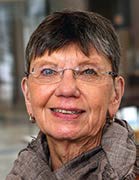
Editor, LipidSpin
Medical Director, Lipid Clinic and Physician Advisor Ascension Wisconsin All Saints
Racine, WI
Diplomate, American Board of Clinical Lipidology