



.jpg)
.png)





Greetings from those of us at the Midwest Lipid Association (MWLA). We all trust that you had an excellent summer as we head into cooler weather and color changes up here in the Midwest and Canada. For those of you who do not know, our Canadian partners who are National Lipid Association (NLA) members are represented through the MWLA Chapter. It’s our pleasure to bring you this issue of LipidSpin.
At the MWLA, we are proud of our leadership heritage from the Midwest in the evolution of lipid sciences that set the stage for what we do at the bedside as clinical lipidologists and lipid specialists. This history spans from the moment of discovery, to the identification of new therapeutic targets, bringing new therapies to market and translating new treatments into meaningful clinical guidelines (along with other educational materials) all the way through to helping clinical lipidologists and lipid specialists provide the highest quality of care for their patients.
The legacy goes back to the seminal work of Ancel Keys, MSc, PhD, in the 1950s at the University of Minnesota when he postulated a correlation between cholesterol levels and cardiovascular events. He then networked with world experts to establish its relevance. The partnership across our northern border in Canada is also well established. Around the same time from their lab at the University of Saskatchewan, Achtshul and colleagues described in 1956 the potential of using supraphysiologic doses of niacin to treat hypercholesterolemia. Shortly thereafter, Parsons and Flynn at the Mayo Clinic further demonstrated the benefit of using niacin to lower cholesterol and triglycerides. Angelo Scanu, MD, who passed away earlier this year, led the way to determine the structure function and function of Lp(a) at the University of Chicago. Patrick Moriarty, MD, FNLA, from the University of Kansas continues to collaborate on Lp(a) with Marlys Koschinsky, PhD, FNLA, and Michael Boffa, PhD, from the University of Western Ontario.
In the backdrop of this rich history, innovation has continued through present day. Atorvastatin was developed in Ann Arbor by Roger Newton and others who have also been instrumental in developing bempedoic acid. George Abela, MD, MSc, FNLA, in East Lansing, Mich., continues his work demonstrating the relevance of the cholesterol crystal in creating atherothrombotic events. Brian Ference, MD, formerly of Wayne State University in Detroit and now at Cambridge University has led the development on how to utilize predictive genomics to better recognize the utility of recently established and evolving therapeutic targets. By combining large genetic and clinical datasets and applying Mendelian Randomization techniques, he is able to identify and test targets in silico before they go into the animal lab or human trials. This technique has also been able to better predict results of ongoing clinical trials or those which are still in design phase. Several of us here in the Midwest have had the privilege to also collaborate with other innovators in the field of predictive genomics, such as Szilard Voros, MD, at the Global Genomics Group (G3). His work leverages advanced systems biology techniques by integrating panomics (combined lipidomics, proteinomics, glycomics, inflamanomics, etc), large graphical modeling of complex metabolic pathways and Bayseian Network analyses to identify new therapeutic targets and display their significance on simplified heatmaps. The recent correlation of LDL-TG to CVD risk is a good example of how this approach helps confirm existing theoretical work and accelerate discovery.
The same US-Canadian partnership occurs when developing key NLA guidelines, safety assessments and position papers.
We keep in mind that the MWLA was a founding affiliate of the NLA in 2002 with leaders of their own right like Anne Goldberg, MD, FNLA, Michael Davidson, MD, FNLA, Peter Toth, MD, PhD, FNLA, and now Alan Brown, MD, FNLA, ultimately becoming NLA Presidents. We can also note that former Presidents James McKenney, PharmD, CLS, FNLA and Carl Orringer, MD, FNLA also have roots in the Midwest. The long-term contributions of those like Neil Stone, MD, FNLA, Jennifer Robinson, MD, MPH, FNLA, and many countless others do not go unrecognized either.
It’s with this ripe tradition with a strong collegial spirit and collaborative networking that current MWLA leadership is working hard to continue making a difference for its members by enhancing engagement in research, participating in key advisory boards and creating “teachable moments” as a continuous learning organization. I cannot go without thanking the entire MWLA Board including Past Presidents Kaye-Eileen Willard, MD, FNLA and Sanford Carimi, MD, FNLA, along with President-Elect Sarah Hallberg, DO, MS, FNLA, for their ongoing efforts in making this all happen.
In this issue of LipidSpin, current MWLA authors (most who are current board members) along with several NLA leaders from other affiliate chapters share their insights as to how recently approved therapies can fit into current lipid practice.
They also provide a glimpse into future therapies coming over the event horizon and how they will potentially shape the future for Clinical Lipidologists and the NLA. I would like to thank MWLA leaders David Davidson, MD, Dr. Moriarty, Dr. Koschinsky, Dr. Boffa, and Dr. Abela along with Sergio Fazio, MD, PhD, FNLA, Jonathan Purnell, MD and Eliot Brinton, MD, FNLA, from the PLA for taking time out of their busy lives to provide their thoughtful contributions.
We hope you enjoy!
Disclosure statement: Dr. Neff has no financial disclosures to report.
Article By:
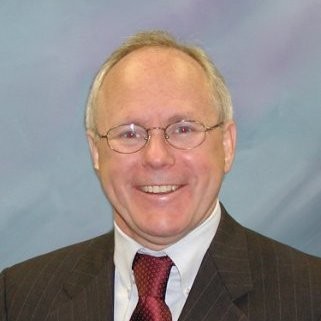
President, Midwest Lipid Association
Michigan State University
College of Osteopathic Medicine
Associate Clinical Professor
Department of Family & Community Medicine
Ingham Regional Medical Center
Lansing, MI