




.jpg)
.png)




Providing education on healthy eating to the underserved population can be challenging. As a dietitian in a rural federally qualified health center, I often am asked to see patients with abnormal lipids, diabetes, obesity and/or cardiovascular disease who have difficulty affording the foods recommended by their healthcare provider. Many of these patients have to stretch small food budgets or receive from social services small stipends that comprise their entire food budget. These same patients often are reluctant to confide in their practitioner that they obtain some, or all, of their food from a food bank.
According to the “Feeding America” website, more than 46 million people in the United States have sought assistance from the organization. This does not include local civic and church organizations that may not be a part of the Feeding America system. Feeding America has developed a donors’ list of suggested healthy food donation options, which can be found on its website at hungerandhealth.feedingamerica.org.
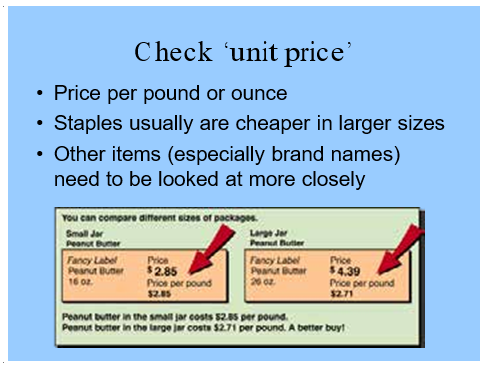
As part of the Clinicians Lifestyle Modification Toolkit, there is a handout with advice on healthy eating, which is available on the website for members. This article will share some tips and recipes you may share with your patients who are impoverished.
Tips for Healthy Eating on a Budget
Planning is key for shopping on a budget:
• The best way to begin is by planning ahead.
• Ask your family what they will eat that is healthy.
• Avoid “junk” foods that are empty of nutrition, add calories, increase weight and cost a lot of money in the long run.
• Prepare a list of meals before you go shopping.
• Keep a file of low-cost recipes, especially recipes that include foods from the food groups you seem to
be missing.
• Become a cook; Making meals from scratch often is healthier and less expensive.
• Look at the calendar to plan meals for the week or month.
• Know how much of each item you will need and how much of each item you already have.
• Make a list of what is in your pantry and what you need to buy.
• Check newspapers and mailers for coupons and specials while comparing prices between stores.
• Plan to re-use your leftovers in a new recipe or as a second meal.
• Plan to pack your lunch for work rather than eating out.
• Eliminate extras –this is a good place to trim food costs and unwanted calories – by limiting sweets, fatty foods, soda, alcohol and tobacco products.
How to shop to get the most for your budget:
• When shopping, buy only what is on the list, unless:
• There is something on special or at a lower price that you can substitute for another food;
• Pantry staples are on sale; or
• Family favorites are on sale.
• Keep in mind that plain cereal costs less and can be “dressed up”.
• Look at purchasing store brands rather than brand names; oftentimes the same manufacturer makes both products.
• Convenience is something you pay for and will always be more expensive.
Be prepared:
• Take your list, calculator, pen and paper, glasses if needed to read food labels.
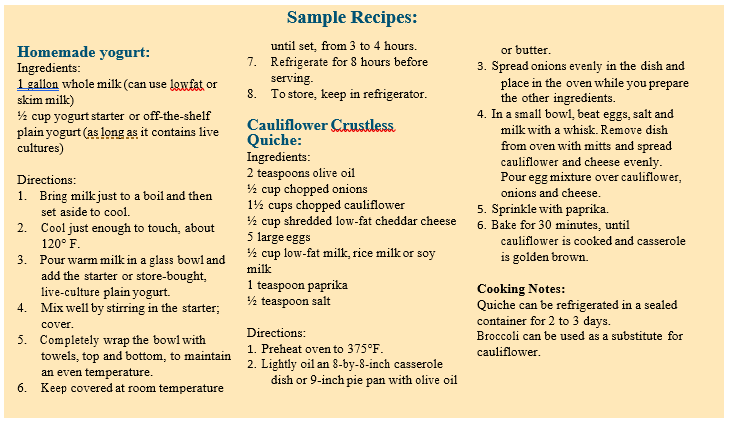
• Use unit pricing, if available, and/or read the labels for weight or volume when comparing prices.
• Protect perishables - Buy only what you can use; store fresh produce, unwashed and wrapped, in the lower portion of your refrigerator.
Money-saving tips:
• Buy day-old rolls and bread to freeze and/or use as breadcrumbs.
• Plain pasta shapes are cheaper.
• Regular rice costs a fraction of instant rice and is more nutritious.
• Plain, frozen vegetables cost less than sauce-covered vegetables.
• Cut up large cuts of meat at home into individual portions.
• Bake your own cookies and cakes.
• Buy non-food items at "discount" stores.
• Frozen and canned fish cost less than fresh.
• Whole chickens cost less than chicken parts and can be used in multiple recipes.
• Dried beans are cheap, easy to cook and can be added to beef to help “beef” up a recipe.
• Buy nutritious snacks – ready-to-eat foods such as carrots, celery, raisins and peanut butter are healthier and cheaper than sweets.
• Nonfat dry milk costs less and is useful for cooking and drinking.
• Buy solid cheese and grate or slice it at home to save money.
• Yogurt is an inexpensive way to get mopre dairy and also can be used as a dessert – just add fruit and/or honey.
• Grow your own – a garden or a few potted plants can yeild low-cost, nutritious produce. Extra vegetables can be frozen or canned.
• Stock up on canned “specials” and large bags of frozen vegetables or fruit.
• Buy fresh fruit and vegetables in season.
• Buy fruit “juice” not “drink” or “ade.” Concentrates often are less expensive.
• Avoid costly convenience foods that are pre-cooked, instant, individually packaged, pre-sweetened or spiced.
• Go to farmers’ markets. Supplemental Nutrition Assistance Program (SNAP) benefits can be used at most farmers’ markets. If it is almost closing time, the farmers often don’t want to take home extra produce and will sell it at a bargain price.
Disclosure statement: Colleen Groves has no disclosures to report.
References are available here.
Article By:

Dietitian/Diabetes Educator
Bland County Medical Clinic
Bastian, VA