



.jpg)
.png)





A: I have always had an innate desire to help others. Initially, I anticipated a career in law. I remember taking a career assessment in high school and laughing when the recommendation was a career in healthcare. With the mental image of working long nights and holidays, I did not consider healthcare a viable career option. In my freshman year of college, I still had other plans. Ironically, my mom completed her first nursing degree around that time. I experienced the depth and breadth of nursing as I witnessed the difference she made in the lives of her patients. My thought process changed, and I realized nursing was part of my destiny. Early in my nursing career, I recognized a desire to take a more active role in directing my patients’ care. Becoming a nurse practitioner was the perfect option. I now enjoy developing personal relationships with my patients and their family members as we partner to address their healthcare needs.
Q: What pushed you to open the country’s first clinical lipidology subspecialty program?
A: As an Assistant Professor in the College of Nursing at University of South Alabama, I am intimately involved in the Doctor of Nursing Practice Program and the Family Nurse Practitioner Program. Immediately upon joining the faculty, I noticed that many students were focusing their doctoral projects on lipids without a clear understanding of the fundamental intricacies of clinical lipidology. The clinical lipidology subspecialty program helps prepare students to provide culturally competent care to patients and families with complex dyslipidemia and gain didactic knowledge needed to prepare for the Clinical Lipid Specialist exam. There is a vast need for lipid specialists, both locally and nationally. Developing the first clinical lipidology subspecialty program allowed me to have a greater impact in meeting the needs of patients across the country.
Q: Why is it important to you to provide training to become a Clinical Lipid Specialist, particularly with you opening it to PharmD and PA students?
A: Becoming a Clinical Lipid Specialist has been one of the best decisions of my professional career. Being able to provide specialized care to those who would otherwise be unable to attain that level of care has brought a great professional sense of accomplishment. In an effort to increase the number of Clinical Lipid Specialists, we decided to allow physician assistant and PharmD students to attend the clinical lipidology program. We hope that this results in more comprehensive culturally appropriate care for those with complex dyslipidemia across the country.
Q: How did you become involved with the NLA?
A: I often joke that the NLA was a hidden treasure that I stumbled upon unexpectedly. Since beginning my nurse practitioner program, I have been intensely interested in lipid disorders because of a personal family history of premature ASCVD. Since there were no local lipid specialists to treat my family members and I presumed many others in our community, I decided to fill that void. In searching for resources to learn more about lipidology and become a local expert in lipid disorders, I found the NLA. This discovery exposed the wealth of knowledge offered by leading experts in the field. Over the last five years, the relationships developed at the NLA have played a pivotal role in my personal development as a Clinical Lipid Specialist.
Q: What would you like to see occur in the field of lipidology?
A: The field of lipidology has grown significantly over the last several years. I would like to see sustained growth and increased participation through a team-based approach from all of the major disciplines including medicine, nursing, pharmacy, dietetics and exercise physiology. Participating in a team-based approach to healthcare allows patients to benefit from the knowledge of experts in each field. Accessibility to experts from all fields may be more common in larger urban practices than in smaller rural practices. Telemedicine offers this accessibility to patients across the world without regard to location or population. The field of psychiatry has successfully implemented telemedicine consultative practices in various settings and lipid specialist would be wise to follow their lead.
Q: What is something surprising that most people do not know about you?
A: In early Summer 2014, I woke up in my recliner totally paralyzed except for my hands, feet and head. I was obese, hypertensive, sedentary and dyslipidemic. Though unsure of the cause, I was determined to go to work the following day because I had patients scheduled and I couldn’t cancel an entire clinic. Per my request, my wife attempted to help me out of my recliner and I fell face first on the floor. My brother came to my rescue and transferred me to the couch. All the while I resisted their urging to go to the emergency department because I had to work the next morning, and I was certain I would get better. Several hours later when my hands and feet became paralyzed, I relented and agreed to go to the emergency room but only after I called to make sure a specific neurologist could see me. Eventually, after an extensive workup, my potassium was 1.5 mEq/L and I had periodic hypokalemic paralysis. After some potassium replacement, I was ambulating and ready to be discharged. This propelled me to enact several therapeutic lifestyle changes, adhere to a Mediterranean diet and exercise daily. I have since lost about 85 pounds along with the diagnosis of HTN, obesity and dyslipidemia.
I also have an extensive bow tie collection with over 250 different ties. Solids, stripes, polka dots, argyle and almost any different pattern you can imagine.
Q: Tell me about your hobbies outside of the office.
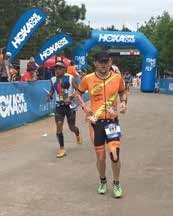
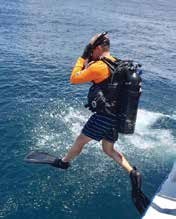
A: I am an endurance sports fanatic. I LOVE competing in IRONMAN triathlons. These events consist of completing a 2.4 mile swim, 112 mile bike ride, and 26.2 mile run within 17 hours. I have finished nine IRONMAN events (as of this writing) and have three more scheduled this year. When I complete these three events, I will qualify for the Ironman World Championships in Kona, Hawaii. Endurance sports have become my solace providing a source of clarity and escape that I never knew existed. I feel alive after 12-13 hours of continuous exercise. It is exhilarating to know that I am doing something that most of the population will never attempt or accomplish. I also recently certified in recreational scuba diving and have become quite enamored with the world beneath the waves.
Article By:

Assistant Professor
University of South Alabama
College of Nursing
Mobile, Alabama
Director/Founder
The Lipid Center at Cooper Family Medical Center
Pascagoula, Mississippi
Diplomate, Accreditation Council of Clinical Lipidology