



.jpg)
.png)




Donald S. Fredrickson (1924-2002), a physiologist and science administrator, made signal contributions to American medicine over the course of four decades, first as a laboratory scientist, then as a leader of several prominent medical research institutions. Fredrickson's studies of the connection between fats and heart disease, especially his pioneering classification of abnormalities in fat transport in the blood, made him one of the most widely-cited physiologists of the 1960s and 1970s. His system of classification was adopted by the World Health Organization as an international standard for identifying increased risks of coronary artery disease linked to the consumption of fats and cholesterol. He also discovered two genetic diseases caused by disorders in lipid metabolism. As director of the National Institutes of Health (NIH), the world's foremost biomedical research facility, Fredrickson mediated between scientists and the federal government during contentious, far-ranging debates over the direction of medical research policy, research funding, and the dangers of genetic engineering during the second half of the 1970s.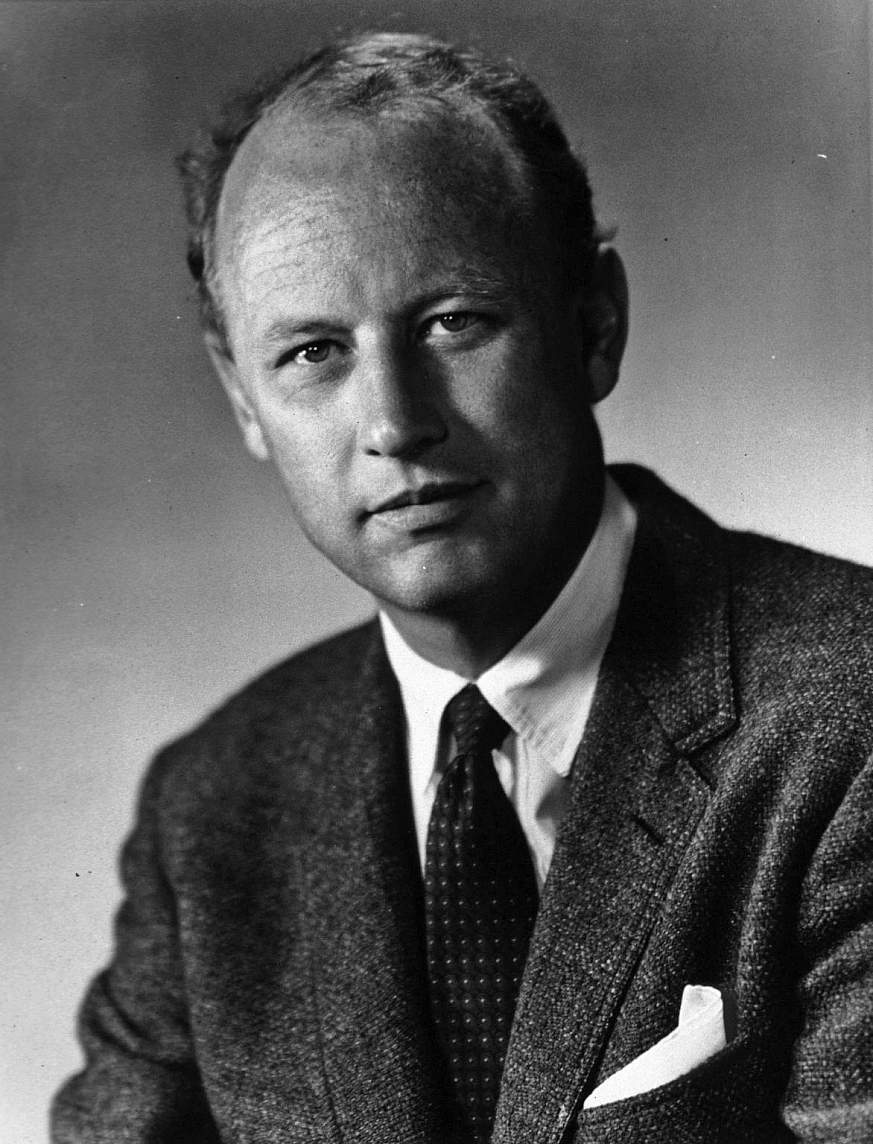
Donald Sharp Fredrickson was born in Cañon City, Colorado, on August 8, 1924. During World War II he enlisted in the reserves at the University of Colorado before transferring to the Army Specialized Training Program in engineering at the University of Michigan, a subject for which army tests had indicated a special aptitude. After another army aptitude test and with the end of the war in sight, Fredrickson settled on medicine as his true calling. He received his bachelor's in 1946 and his medical degree in 1949, both from the University of Michigan. He was certified by the American Board of Internal Medicine in 1957.
While touring Europe by bicycle, Fredrickson met Henriette Priscilla Dorothea Eekhoff, a Dutch law student at the University of Leyden. They married in the Hague in 1950. During the 1950s, she supported the junior scientist and their two sons through an import company for Dutch cigars she founded.
Fredrickson conducted postgraduate research at Harvard University Medical School and Massachusetts General Hospital before arriving at the National Institutes of Health in Bethesda, Maryland, in 1953. He was one of ten young physicians chosen by NIH Director James Shannon as clinical associates in the National Heart Institute and placed in the Institute's research laboratories in the newly-opened NIH Clinical Center. From an early stage in his professional career, Fredrickson sought to integrate laboratory research with clinical practice, to place science in the service of treating disease.
After a research career in laboratories devoted to cellular metabolism, physiology, and molecular diseases, he became director of the National Heart Institute in 1966, a position he held until 1968. During his term as director the first heart transplant in man was performed by South African heart surgeon Dr. Christiaan Barnard, with whom Fredrickson arranged a historic meeting on December 18, 1967, at Chicago's O'Hare airport. The meeting was attended by prominent heart surgeons in the United States who were soon to replicate Barnard's feat. Fredrickson remained at the National Heart Institute as Director of Intramural Research until 1974.
In late spring of 1974, Dr. Fredrickson left the NIH to become the second President of the Institute of Medicine, a health care and medical research policy think tank in Washington, D.C., established under the auspices of the National Academy of Sciences. He recalled that he was attracted to his new position because "there was a rich mixture of the dialects and ethics operative in the world outside the laboratory walls" that offered "an unparalleled view of the complex field of human health." During his brief tenure at IOM he proved an effective fundraiser, a new role for an administrator used to administering, not soliciting, research funds.
Almost from the moment Dr. Fredrickson joined the Institute of Medicine, he was drawn once again into the administrative politics of NIH. The directorship of NIH had become vacant for the second time in as many years. Fredrickson received phone calls from federal officials indicating dissension in the upper ranks of NIH, and asking Fredrickson to step into the void of leadership by becoming NIH director. On April 19, 1975, Fredrickson returned to Bethesda as director of NIH. In a conversation with Philip Handler, the President of the National Academy of Sciences, Fredrickson justified his decision by stating that leading NIH was "not a job; it's a cause."
Over the next six years, Fredrickson's administrative and political skills were frequently tested during the most turbulent period in the history of the NIH. Immediately he was thrown into the growing controversy over the environmental hazards and the ethics of recombinant DNA research, cutting-edge genetic experimentation that, critics warned, could produce new and untreatable pathogens and presented an unwarranted human manipulation of the natural order. During the economic and budget crises of the late 1970s, the U.S. Congress considered reducing government funding on which NIH and, through its extramural grant program, most biomedical research in the United States depended. Members of Congress who sought to curtail NIH funding said that basic research sponsored by NIH did not yield clinical applications and therapies rapidly enough to benefit patients. Not least, Fredrickson had to adjust to the changing priorities of three U.S. Presidents and five Secretaries of Health, Education, and Welfare (since 1980, Health and Human Services) under which he served.
Fredrickson's main success as NIH director lay in devising guidelines for recombinant DNA research that preserved freedom of scientific inquiry while allaying public fears of genetic manipulation; stabilizing NIH funding at a time of retrenchment; and fostering consensus among clinical and scientific researchers at NIH, groups that often found themselves at odds in their research objectives and struggle for funding. With these controversies alleviated, Fredrickson completed his tenure as director of NIH in June of 1981.
After two years as Scholar-in-Residence at the National Academy of Sciences, Fredrickson became first vice president, then president, CEO and trustee of the Howard Hughes Medical Institute (HHMI). Fredrickson oversaw the sale of the Institute's sole asset, the Hughes Aircraft Company, for six billion dollars, as well as the Institute's subsequent expansion into the largest source of philanthropic support for biomedical research in the United States, dispensing research grants and supporting laboratories in hospitals. Moreover, Fredrickson organized the relocation of the Institute from Coconut Grove, Florida, to Chevy Chase, Maryland.
From 1987 until his death, Fredrickson was Scholar-in-Residence at the National Library of Medicine, and a consultant on medical research and health care issues in the United States and abroad as President of D. S. Fredrickson Associates. Drawing on his early medical training, he became personal physician to King Hassan II of Morocco in 1975, a service for which he was elected a member of the Academy of the Kingdom of Morocco in 1991.
Dr. Fredrickson died at his home in Bethesda on June 7, 2002.
Brief Chronology
- 1924 --Born in Cañon City, Colorado (August 8)
- 1943-46 --Engineering student in the Army Specialized Training Program
- 1946, 1949 --Received BS and MD degrees from the University of Michigan
- 1949-52 --Postdoctoral training in internal medicine at Peter Bent Brigham Hospital in Boston
- 1950 --Married Dutch law student Henrietta Priscilla Dorothea Eekhof in the Hague, Netherlands
- 1950-51 --James Jackson Cabot Research Fellow in Medicine, Harvard Medical School
- 1952-53 --Research fellow in medicine at the Massachusetts General Hospital in Boston
- 1953-55 --Clinical Associate, National Heart Institute, National Institutes of Health (NIH) in Bethesda, Maryland; investigated lipid transport in the blood
- 1955-61 --Member of the senior research staff in the Laboratory of Cellular Metabolism, National Heart Institute
- 1957 --Certified by the American Board of Internal Medicine
- 1960 --First to describe and name Tangier disease, an abnormality in the storage of cholesterol in the body
- 1960 --Published standard textbook, The Metabolic Basis of Inherited Disease, with John B. Stanbury and James B. Wyngaarden
- 1961-66 --Clinical Director, National Heart Institute
- 1962-66 --Head of the Section on Molecular Diseases in the Laboratory of Metabolism, National Heart Institute
- 1966-68 --Director, National Heart Institute
- 1967 -- New England Journal of Medicine published a five-part review of Fredrickson's work on abnormalities in lipid metabolism
- 1968-74 --Scientific director, National Heart Institute
- 1973 --Participants at the Gordon Conference on Nucleic Acids in New Hampshire called on their fellow scientists to voluntarily suspend certain experiments with recombinant DNA
- 1974-75 --President of the Institute of Medicine of the National Academy of Sciences
- 1975-81 --Director, National Institutes of Health
- 1975 --Over 140 prominent molecular biologists and geneticists attending the Asilomar conference on the dangers of genetically reengineered microorganisms proposed a voluntary moratorium on recombinant DNA research until its scientific and ethical implications could be explored
- 1975-78 --Chairman, Recombinant DNA Advisory Committee (RAC)
- 1975-81 --Chairman, Interagency Committee on Recombinant DNA Research
- 1976 --Released NIH Guidelines for Research Involving Recombinant DNA Molecules (June 23)
- 1976 --Issued a draft Environmental Impact Statement for recombinant DNA experiments (September); a final statement was issued October 1977
- 1977 --Initiated NIH Consensus Development Conferences to bridge scientific and professional differences among NIH personnel
- 1978 --RAC expanded to include non-scientists, among them the new RAC chairman
- 1978 --Chaired National Conference on Health Research Principles, held at NIH
- 1978 --Established the Office of Medical Applications of Research at NIH
- 1979 --Revised recombinant DNA guidelines took effect (January 2), easing containment requirements particularly for experiments involving Escherichia coli strain K-12 as a host-vector system
- 1979 --In a time of federal budget shortfalls, Fredrickson secured funding for a minimum of 5,000 new NIH research grants
- 1981-83 --Scholar-in-Residence, National Academy of Sciences
- 1983-87 --Vice President, then President and CEO of the Howard Hughes Medical Institute, Chevy Chase, Maryland
- 1987-2002 --Scholar at the National Library of Medicine, Bethesda
- 1987-2002 --President, D.S. Fredrickson Associates, a health and science policy consulting firm
- 2002 --Died at his home in Bethesda (June 7)
Biographical information credit: U.S. National Library of Medicine: https://profiles.nlm.nih.gov/ps/retrieve/Narrative/FF/p-nid/70
This page was last updated: Jun 25, 2019