



.jpg)
.png)





Discuss this article at www.lipid.org/lipidspin
“I have never once dribbled the whole field and scored a goal by myself.” — Abby Wambach (retired US Women’s Soccer great)
I am honored to have the unique opportunity to address LipidSpin readers as both its co-editor and guest editor (outgoing NELA President) for The Guidelines issue, a true team effort.
The NLA continues to be a premier organization, blending excellent basic and clinical science, as evidenced by wellearned representation in the crafting of the 2018 Multisociety Cholesterol Guidelines. This issue of LipidSpin is a chance for members to further digest the conclusions and explore nuances of interpretation, looking for the “between the lines” takehome messages.
From my perspective, this issue of LipidSpin means so much more. In addition to the pride I feel in the NLA as a whole, I feel particularly enriched by my opportunity to edit LipidSpin and “guest edit” this issue as the Immediate Past President of NELA.
I have had enough conversations with NLA members and new attendees to recognize that most of us feel mostly isolated at our home institutions because Lipid Specialists tend to be relatively few and far between. The NLA offers us all a chance to visit together as often as three times in a year, but also by way of the @Lipid monthly newsletter, the LipidSpin, the JCL, nonNLA events throughout the year (if we are lucky enough) and on Twitter or other social media.
We share a unique interest in the complexity of atherosclerosis and lipidology/lipoprotein metabolism, and absolutely know that if the rest of the medical community and general population could know what we know, the controversies in our field would melt away to academic only. For example, I feel like we would not have to answer our patients’ questions about the “potential” benefit of statins, we would not feel obliged to address claims about the latest dietary supplement pitched in radio infomercials propped up by basic science findings in seven laboratory rats and we could all agree that nutrition is a critical part of care.
In this issue of LipidSpin, NELA authors provide well-crafted articles outlining the impact and interpretation of the updated 2018 Multisociety Cholesterol Guidelines.
Dr. Karen Aspry, who chaired the Guideline Dissemination Task Force for the NLA, reviews the strategic plan for rolling out the guidelines so that the message is clear as possible. We were lucky enough to have guideline author Dr. Laurence Sperling, with Drs. Devinder Dhindsa and Anurag Mehta, editorialize on the impact of the guidelines on diabetics. We have Drs. Ed Goldenberg and Lawrence Meng with Ms. Heather Milea and Dr. Raveen Chawla reviewing the pros and cons of risk calculators at the dawn of the era of personalized medicine. Drs. Sasha De Jesus, Eugenia Gianos and Merle Meyerson review what the guidelines say and don’t say about care for women. Drs. Douglas Jacoby and Michael Ayers remind us of the firmly established role of coronary artery calcium scoring, prescribed for the first time in national cholesterol guidelines. Former NELA President Dr. Dean Karalis, with Drs. Leandro Slipczuk and Preya Simlote, reviewed the importance of the REDUCE-IT study released coincident with the guidelines publication and thus, not included in the recommendations. Then Drs. Guy Mintz with Ramyashree Tummala put the Guidelines to the test of clinical application.
“If you do not have a mentor (or mentee) at your home institution, you always have the opportunity to make this relationship at the NLA.”
You may recognize some of the above names better than others. I have included the senior authors, along with their junior counterparts, to underscore the importance of this pairing in LipidSpin. From start to finish, each issue is meant to inform us as readers, but the process is as at least as important as the finished product. We aim to provide a venue for NLA authors to foster a supportive structure, to provide editorial and logistical support and provide a venue for staff to hone their own skills. Each issue is crafted by the regional President, who is supported by the regional President-elect, who also has the opportunity to learn the role for next year’s task. Articles are then assigned by the regional leadership to principal authors who are asked to share the writing task with trainees or less-experienced authors. Writing teams are thus composed of more- and less-experienced authors, and the product can then be edited by our team of committee members who volunteer their time and experience and who can use this as an opportunity to gain experience themselves. In this way, authorship duties can be distributed and mentorship extended beyond the principal and trainee.
.jpg)
While there is plenty of room for individuality, we hope that being a Lipid Specialist can feel like a team sport. From the basic sciences, to clinical trials and guideline composition, to clinical management, our work is always enhanced by taking advantage of the cumulative expertise of the team. We are better as individuals when we do this, and our patients and the community are definitely better served.
If you do not have a mentor (or mentee) at your home institution, you always have the opportunity to make this relationship at the NLA. There is a formal mentorship program, but the informal relationships and academic pairings offer organic opportunities to make this happen. I encourage every potential “junior author” to reach out to your regional President and let them know your interest in writing opportunities. Every year is a new chance to make that happen.
It has been my great honor and joy to prioritize the mentor-mentee relationship as both LipidSpin editor and NELA President.
Disclosure statement: Dr. Soffer has served as Consultant for Amgen Inc, Akcea Therapeutics, Medicure, Regeneron, and has been a disease management Speaker on disease states (FCS and FH respectively) for Amgen Inc and Sanofi.
Official Publication of the National Lipid Association
Article By:
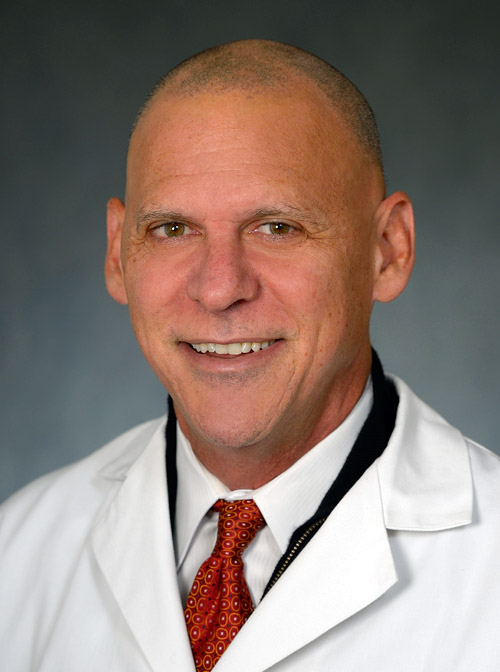
Editor, LipidSpin
Clinical Associate Professor of Medicine University of Pennsylvania
Internal Medicine and Preventive Cardiology
University of Pennsylvania Health System Philadelphia, PA
Diplomate, American Board of Clinical Lipidology