



.jpg)
.png)






Although low-density lipoprotein cholesterol (LDL-C) lowering with statin therapy has been part of the National Cholesterol Education Program guidelines for 26 years, significant residual cardiovascular risk remains in both primary- and secondary-prevention patients. This residual risk is particularly prominent in patients following an acute coronary syndrome (ACS).
Article By:

Intermountain Heart Institute
Intermountain Medical Center
Murray, UT

Director, California Cardiovascular Institute
Assistant Clinical Professor, University of California San Francisco
School of Medicine, Fresno Medicine Residency Program, Volunteer
Fresno, CA
Diplomate, American Board of Clinical Lipidology
The greater danger for most of us lies not in setting our aim too high and falling short; but in setting our aim too low, and achieving our mark.” Michelangelo Buonarroti
Article By:

Clinical Assistant Professor of Medicine
NYU School of Medicine & NYU Center for Prevention of Cardiovascular Disease
Director, Bellevue Hospital Lipid Clinic
New York, NY
Diplomate, American Board of Clinical Lipidology
The National Lipid Association (NLA) is proud to move forward with its Recommendations for Patient-Centered Management of Dyslipidemia for those practicing clinical lipidology in an environment where many clinical queries remain unanswered for clinicians. To that end, the NLA has developed Part II of these Recommendations.
Article By:

Clinical Epidemiology & Biostatistics and Clinical Lipid Professor
Oklahoma University Health Sciences Center
Oklahoma City, OK
Diplomate, American Board of Clinical Lipidology
“Skate to where the puck is going to be, not to where it has been.” Wayne Gretzky
Article By:

President, National Lipid Association
Professor of Medicine, Emory University
Atlanta, GA
Director, Lipid Clinic and Cardiovascular Risk Reduction Program
Diplomate, American Board of Clinical Lipidology
 Dr. Patrick McBride, Associate Dean for Students at University of Wisconsin School of Medicine and Public Health, was recently honored with the Distinguished Achievement Award at the National Lipid Association’s 2015 Annual Sessions.
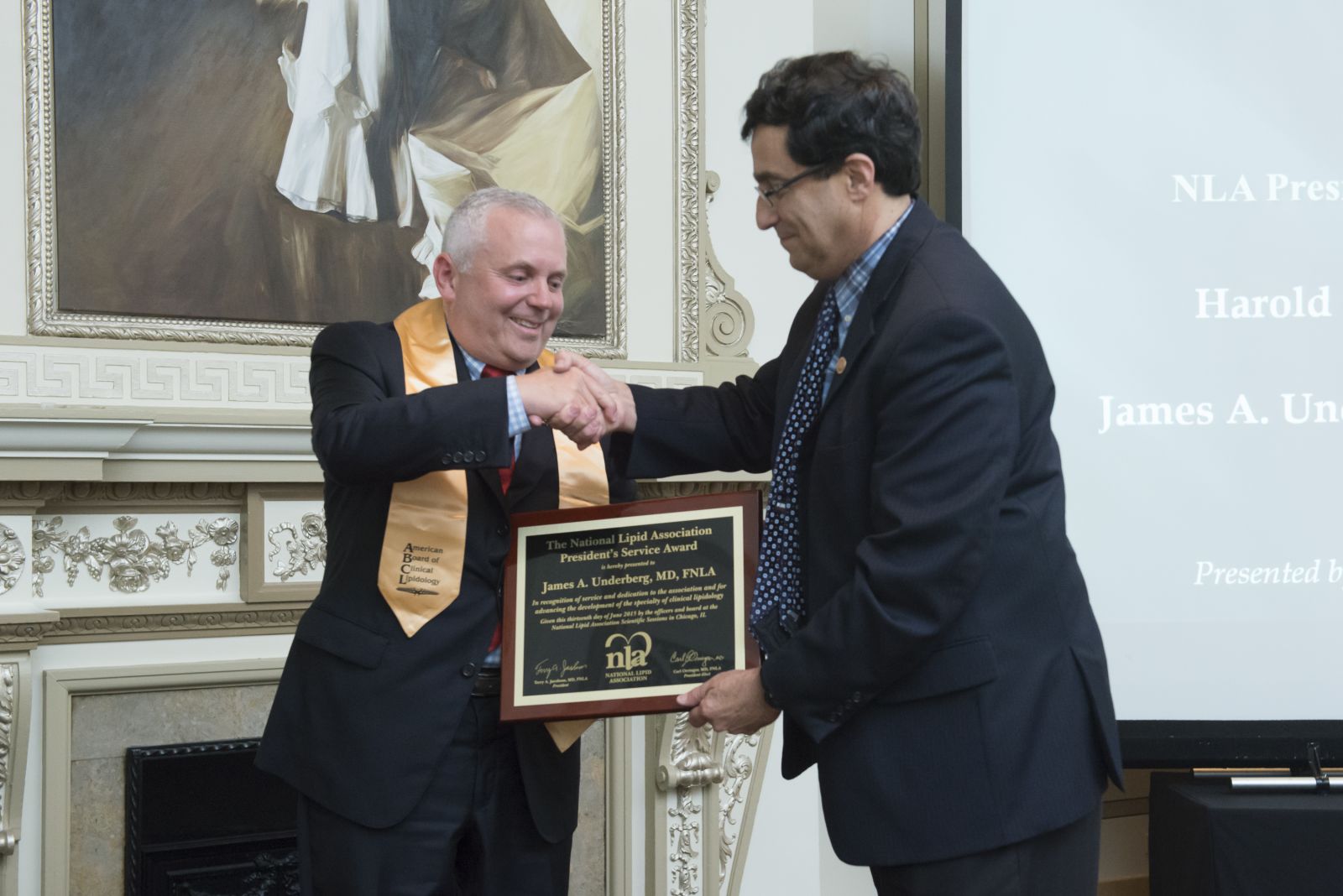 Dr. James Underberg, recently elected treasurer of the NLA, was awarded the President’s Service Award at the National Lipid Association’s 2015 Annual Sessions. This award recognizes an individual for service and dedication to the NLA, and advancing the development of the specialty of clinical lipidology.
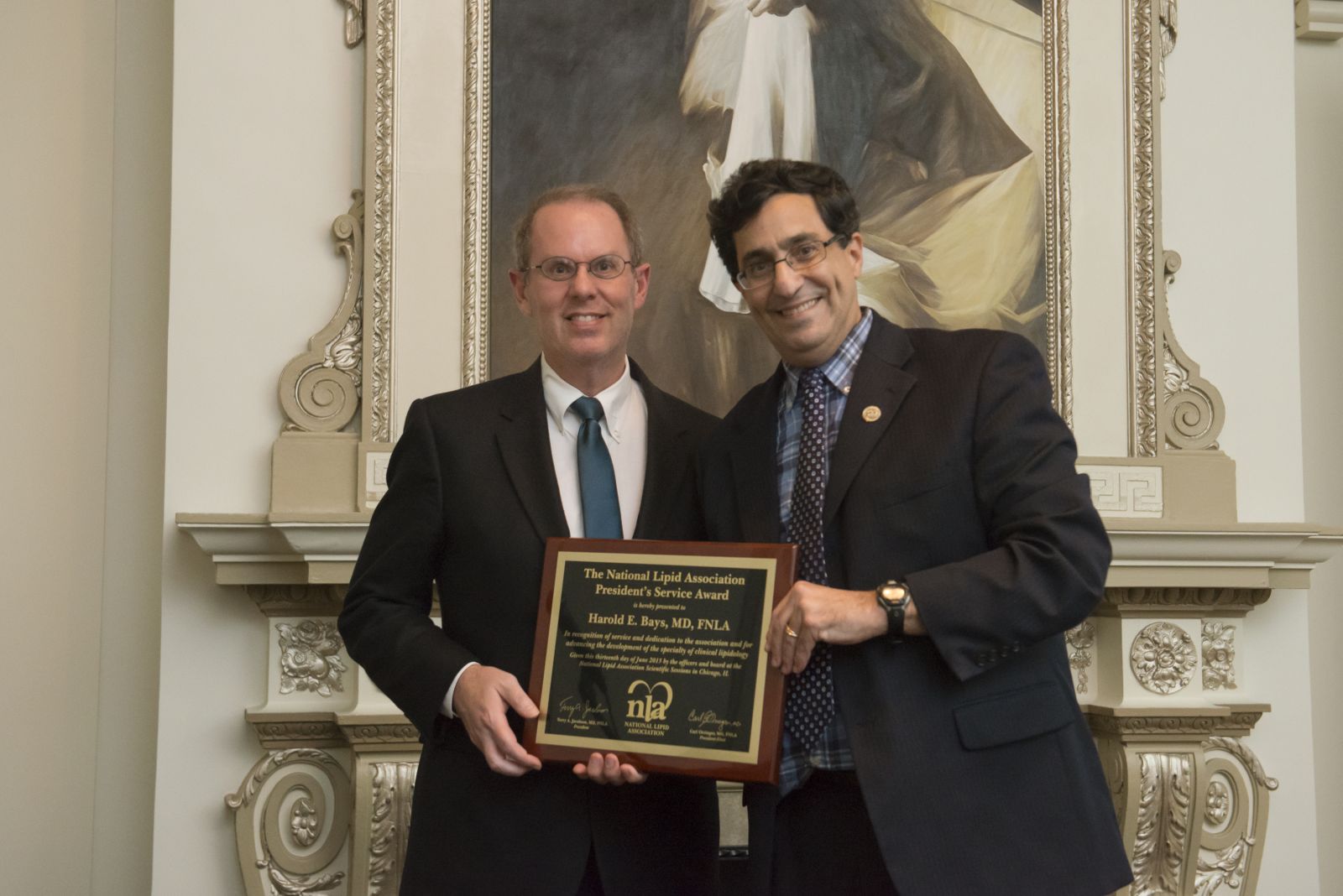 Dr. Harold E. Bays, Louisville resident and SELA President, was recently awarded the President’s Service Award at the National Lipid Association’s 2015 Annual Sessions. This award recognizes an individual for service and dedication to the NLA, and advancing the development of the specialty of clinical lipidology.
The 2014 Impact Factors were recently released and the Journal of Clinical Lipidology (JCL) saw another increase — from 3.587 (2013) to 3.904 (2014). The Journal is now ranked 44th out of 254 journals in its category (pharmacology and pharmacy). The Thomson-Reuters Impact Factor represents the ratio of articles quoted in other scientific publications compared to the total qualifying articles during the years 2012 and 2013.
On February 7, 2015, the National Lipid Association (NLA) Strategic Planning Committee (Committee) convened in Orlando, Florida. The Committee reaffirmed the mission and goals of the organization, and assigned the following as the priorities and deadlines:

Two new PCSK9 monoclonal antibodies have been given a nod of approval to the Food and Drug Administration (FDA). The FDA Endocrinologic and Metabolic Drugs Advisory Committee reviewed the evidence on the new class of cholesterol-lowering drugs and recommended that the FDA should approve the new class of LDL-lowering drugs.
This is great news, especially for high risk patients and for Familial Hypercholesterolemia (FH) patients who are not at their LDL-C and non-HDL-C goals on optimal therapy. The NLA is excited about this decision by the FDA advisory committee.