




.jpg)
.png)






Introduction
Article By:

Center for Preventive Cardiology
Knight Cardiovascular Institute
Oregon Health & Science University
Portland, OR

Center for Preventive Cardiology
Knight Cardiovascular Institute
Oregon Health & Science University
Portland, OR
Abstract
Article By:

Cardiology Fellow Physician
University of Pennsylvania
Philadelphia, PA

Internal Medicine/Clinical Lipidology
University of Pennsylvania Health System
Philadelphia, PA
Diplomate, American Board of Clinical Lipidology

Hepatic Pathology Fellow
University of Pennsylvania
Philadelphia, PA
Peripheral artery disease (PAD) is a common manifestation of systemic atherosclerosis affecting 20% of Americans over the age of 801 and over 200 million people worldwide.2 As well as being common, it also carries high mortality and morbidity; and yet, patients with PAD are overlooked on multiple levels. Many go unrecognized in clinical practice.
Article By:

Cardiovascular Division
University of Minnesota
Minneapolis, MN

Cardiovascular Division
University of Minnesota
Minneapolis, MN
A 73-year-old woman with coronary and peripheral arterial disease with hyperlipidemia was referred for a lipidology consult because of elevated liver function tests (LFTs) while on rosuvastatin. Aspartate amino transferase (AST) rose from a baseline of 26 to 120 and alanine amino transferase (ALT) from 15 to 132. She did not drink alcohol nor take other hepato-toxic pharmaceuticals.
Article By:

Complex Cholesterol Center
St. Vincent Health
Indianapolis, INLFTs
In 2009, a 75-year-old Tsimane man and his wife awoke and went out into the rain forest around their home in the Amazonian lowlands of Bolivia to collect jajata, a palm like plant used to make roofing. Walking home in the afternoon, he collapsed to the ground, unconscious. His wife shook him and after a few minutes he regained consciousness. He complained of chest pain radiating down his left arm. He was having trouble breathing but managed to stand and walk home.
Article By:

Medical Director for Research
Renown Institute for Heart and Vascular Health, Healthy Nevada Project
University of Nevada School of Medicine
Reno, NV

Medical Director
Cardiovascular Program Development
MemorialCare Heart and Vascular Institute
Clinical Professor
Division of Cardiology
University of California, Irvine
Fountain Valley, CA
Introduction
Coronary artery calcium scoring (CACS) was first introduced in the early 1990s as a method for early coronary artery disease (CAD) detection. Since then, there have been significant advancements in CACS from a technological standpoint, but more importantly, continuing compilation of supportive data has led to more widespread use, but certainly not universal acceptance.
Article By:

Fellow in Cardiovascular Medicine
University of Colorado

Fellow - Cardiovascular Disease
University of Colorado

Director of Interventional Echocardiography
Professor of Medicine
Division of Cardiology
University of Colorado School of Medicine, Anschutz
Diplomate, American Board of Clinical Lipidology
Those born with familial hypercholesterolemia (FH) know better than anyone else that they have a family history of early heart disease.
Article By:

Founder and CEO
FH Foundation
Pasadena, CA

Chief Medical Advisor
FH Foundation
Assistant Professor of Cardiovascular Medicine
Stanford University Medical Center
Stanford, CA
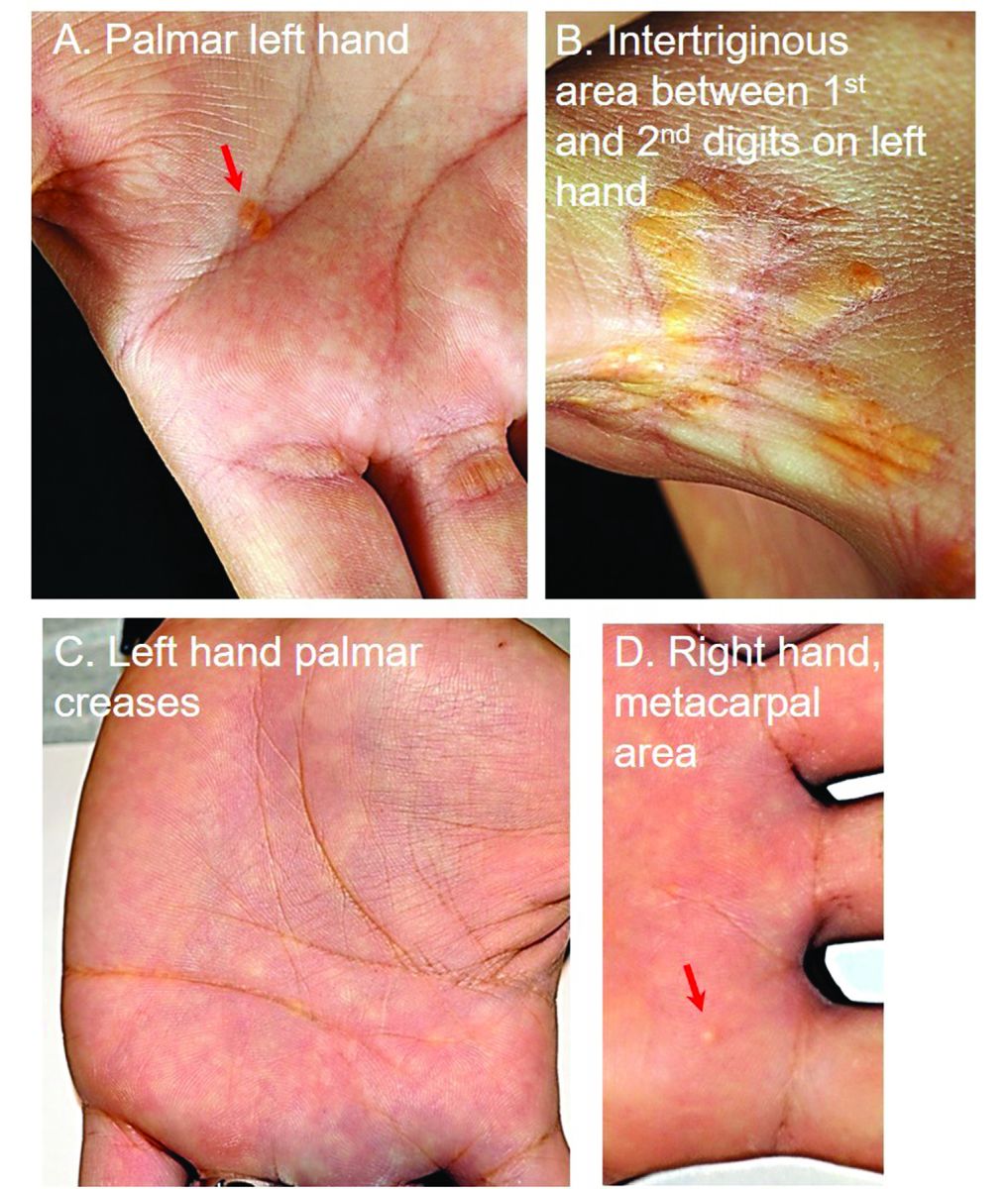
Several genetic lipid disorders manifest with physical examination findings in the palms, making it important for lipid specialists to examine the palms of each patient.
Article By:

Assistant Professor
Division of Nutrition and Metabolic Disease
Department of Internal Medicine
UT Southwestern Medical Center
Dallas, TX

Professor
Division of Nutrition and Metabolic Disease
Department of Internal Medicine
UT Southwestern Medical Center
Dallas, TX
Several genetic lipid disorders manifest with physical examination findings in the palms, making it important for lipid specialists to examine the palms of each patient.
Article By:

Assistant Professor
Division of Nutrition and Metabolic Disease
Department of Internal Medicine
UT Southwestern Medical Center
Dallas, TX

Professor
Division of Nutrition and Metabolic Disease
Department of Internal Medicine
UT Southwestern Medical Center
Dallas, TX
A 47-year-old, non-smoking man with a history of type 2 diabetes mellitus, elevated lipoprotein(a) [Lp(a)] level, and a family history significant for dyslipidemia and premature coronary artery disease (CAD) presents to clinic for routine medical appointment.
Article By:

Johns Hopkins University School of Medicine
Baltimore, MD

Johns Hopkins University School of Medicine
Baltimore, MD